

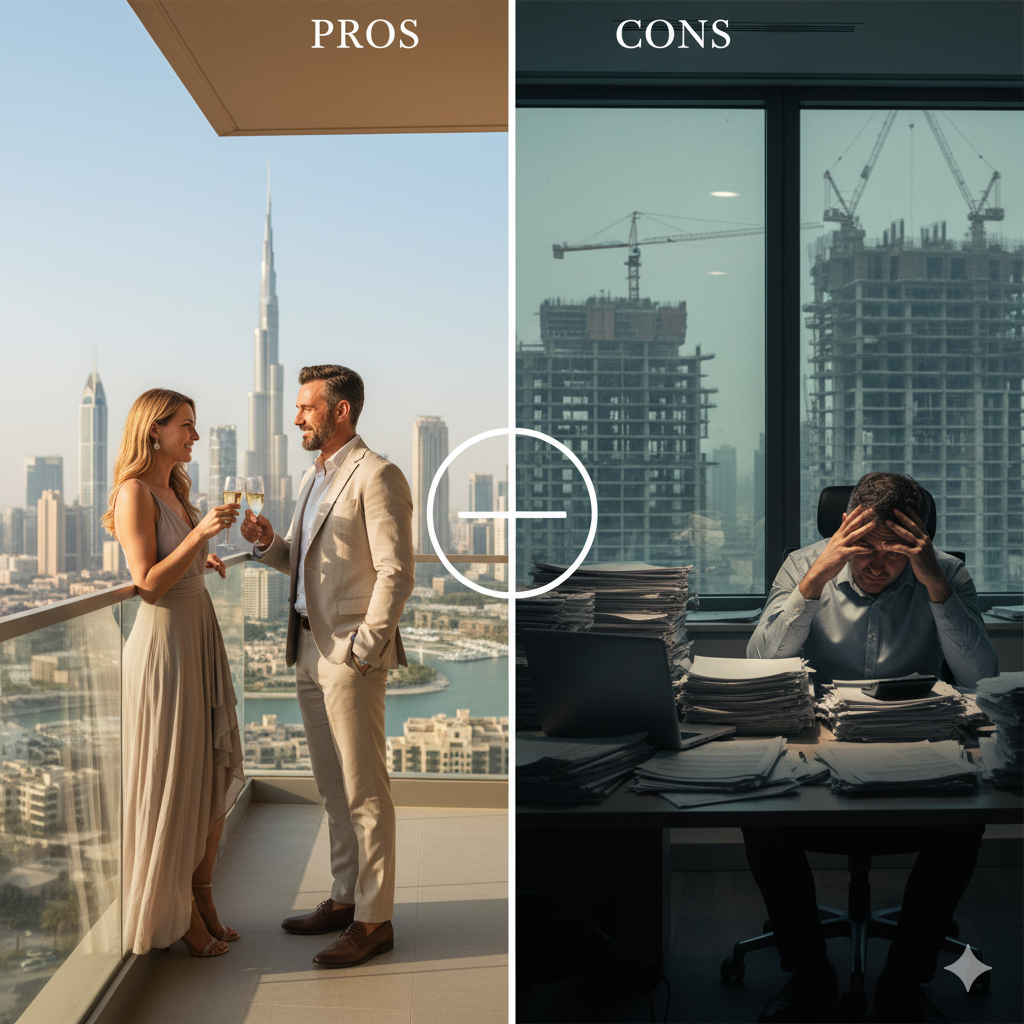
Buying Property in Dubai: Pros and Cons Every Buyer Should Understand
If you’ve been researching buying property in Dubai pros and cons, you’re already one step closer to making a more informed real estate decision. Whether you’re a first-time investor, relocating with your family, or comparing global markets from abroad, Dubai has a way of capturing attention — and for good reason.
As a consultant at 2050 Properties, I’ve guided hundreds of buyers from diverse backgrounds: families upgrading to their first villa, entrepreneurs seeking rental income, and international clients exploring buying property in Dubai as a foreigner for the very first time. Each comes with the same question: “Is Dubai the right market for me?”
This article breaks down the advantages and challenges so you can make a confident, well-reasoned choice.
Why Dubai Continues to Attract Global Buyers?
Dubai’s appeal goes beyond stunning architecture and modern infrastructure. The emirate offers a stable economy, safe living environment, strong rental yields, and a property market regulated by the Dubai Land Department — essential factors for local and international investors alike.
Yet, like any investment, buying here comes with considerations that deserve clarity.
H2: The Pros of Buying Property in Dubai
H3: 1. Full Foreign Ownership Through Freehold Areas
One of the biggest advantages is the availability of freehold property in Dubai. Designated districts — from Downtown to Palm Jumeirah to Dubai Hills Estate — allow foreigners to own property outright with 100% freehold rights.
This means:
-
You can sell, lease, or live in the property without restrictions
-
Ownership is registered under your name with the Dubai Land Department
-
You can pass it on as inheritance
For buyers relocating from countries with complex real estate systems, this level of ownership often feels refreshingly straightforward.
H3: 2. Attractive Rental Yields and High Demand
Dubai consistently offers stronger rental yields than many Western cities — often between 5% and 8% for well-located apartments and villas.
Demand remains strong due to:
-
Population growth
-
Corporate expat relocations
-
Tourism-driven short-stay rentals
-
A lifestyle that blends luxury with urban convenience
For those researching Dubai property investment for Canadians, the comparison is especially striking: yields are often significantly higher than in Ontario or British Columbia.
H3: 3. Long-Term Residency Through Property Investment
The Dubai property visa is a major draw. Buyers who meet minimum investment thresholds can qualify for:
-
A 2-year renewable property visa
-
Or the coveted Golden Visa (10 years) for eligible property values
This appeals to investors seeking stability, tax advantages, or a future base in the UAE.
H3: 4. Tax-Friendly Environment
Dubai imposes:
-
No annual property tax
-
No capital gains tax on real estate
-
No tax on rental income
For investors accustomed to heavy tax burdens in their home countries, it’s a compelling relief.
H3: 5. World-Class Lifestyle and Infrastructure
Buyers often fall in love with the city itself. Beaches, schools, international cuisine, world-class healthcare, and a deeply multicultural community create a lifestyle that is hard to match.
For families, Dubai offers a secure and dynamic environment. For investors, demand for this lifestyle supports long-term property value growth.
H2: The Cons of Buying Property in Dubai
Even with its strengths, it’s important to look at buying property in Dubai pros and cons objectively.
H3: 1. High Upfront Costs
While Dubai offers impressive value compared to other global hubs, buyers must still account for:
-
4% Dubai Land Department fee
-
Administration fees
-
Service charges for maintenance in residential buildings
These costs aren’t hidden — but they do add up, especially for first-time buyers.
H3: 2. Service Charges Vary Widely
Dubai’s premium communities come with premium upkeep.
Service charges depend on:
-
Location
-
Building quality
-
Amenities
-
Management
A waterfront tower with pools, gyms, and concierge services will naturally cost more. Buyers must evaluate this carefully during budgeting.
H3: 3. Market Cycles Can Affect Short-Term Investors
Dubai’s real estate market is well-regulated today, but like any international city, it experiences cycles. Investors looking for quick returns might feel pressure during slower phases.
However, long-term owners generally see healthy appreciation over 7–10 years.
H3: 4. Understanding Dubai Real Estate Laws Takes Time
Foreign buyers often ask:
“Is it complicated to buy in Dubai?”
The answer is no — but understanding Dubai real estate laws, ownership rights, and visa eligibility requires guidance. That’s where a trusted brokerage makes all the difference.
At 2050 Properties, we walk clients through every step so they never feel lost or overwhelmed.
H2: Buying Property in Dubai as a Foreigner: What You Should Expect
If you’re exploring buying property in Dubai as a foreigner, you’re in good company. International buyers make up a significant share of Dubai’s property market.
What to expect:
-
You can own 100% freehold in approved areas
-
You do not need a UAE residency visa to buy
-
You can purchase off-plan or ready properties
-
Funds can be transferred internationally through regulated channels
-
Your ownership is legally protected by the Dubai Land Department
Foreign buyers from Canada, Europe, the UK, India, Africa, and the GCC often appreciate the transparency of this system.
H2: The Canadian Buyer Perspective
If you’re researching Dubai property investment for Canadians, you’re not alone. Many Canadians are moving funds to Dubai due to:
-
Higher rental yields
-
Zero property tax
-
Diversification away from an overheated domestic market
-
The appeal of wintering in a warm, safe, modern city
One Canadian client once joked to me, “It’s the only place where I can leave my laptop on a café table and know it’ll still be there when I get back.” Dubai’s safety and quality of life play huge roles in long-term confidence.
H2: Freehold vs. Leasehold: Know the Difference
Understanding the distinction is key:
Freehold
-
Full ownership
-
No restrictions on selling or leasing
-
Most popular choice for foreigners
Leasehold (usually 99 years)
-
Ownership of the right to use, not the land
-
Often cheaper
Most international buyers choose freehold for long-term flexibility.
H2: How Dubai Real Estate Is Regulated?
Dubai’s property market is overseen by:
-
Dubai Land Department (DLD)
-
Real Estate Regulatory Agency (RERA)
These authorities protect buyers through:
-
Standardized contracts (Form A, B, F)
-
Escrow laws for off-plan projects
-
Licensing for developers and brokerages
-
Service charge audits
This structured system reduces risk and enhances transparency — a key reason Dubai remains one of the world’s most trusted property markets.
H2: Is Buying Property in Dubai Right for You?
Consider your goals:
-
Do you want rental income?
-
Are you seeking a second home?
-
Is long-term residency through property important to you?
-
Are you comparing Dubai to markets with high taxes or slow appreciation?
The answer depends on your personal and financial priorities — and having expert guidance helps tremendously.
H2: Final Thoughts: Making a Smart, Confident Decision
Understanding buying property in Dubai pros and cons is the first step toward a confident investment. Dubai offers extraordinary benefits — from tax-free ownership to high rental returns and world-class living — but like any major decision, it requires clarity and strategy.
If you’d like personalized advice, market insights, or curated options based on your goals, the team at 2050 Properties is here to help. Whether you’re exploring freehold opportunities, residency options, or long-term investment strategies, we’ll guide you every step of the way.
FAQ Section
1. Is buying property in Dubai worth it for foreigners?
Yes. Foreigners can own freehold property, enjoy tax advantages, and benefit from strong rental yields.
2. Can I get residency if I buy property in Dubai?
Eligible buyers may qualify for a 2-year visa or the long-term Golden Visa, depending on the property’s value.
3. Are there property taxes in Dubai?
No annual property tax exists. Owners pay only one-time transaction fees and service charges.
4. Is Dubai’s real estate market safe?
The market is regulated by the Dubai Land Department and RERA, offering high transparency and investor protection.
5. Can Canadians and other expats buy property in Dubai easily?
Yes. The process is straightforward, with clear regulations and designated freehold areas open to all nationalities.